
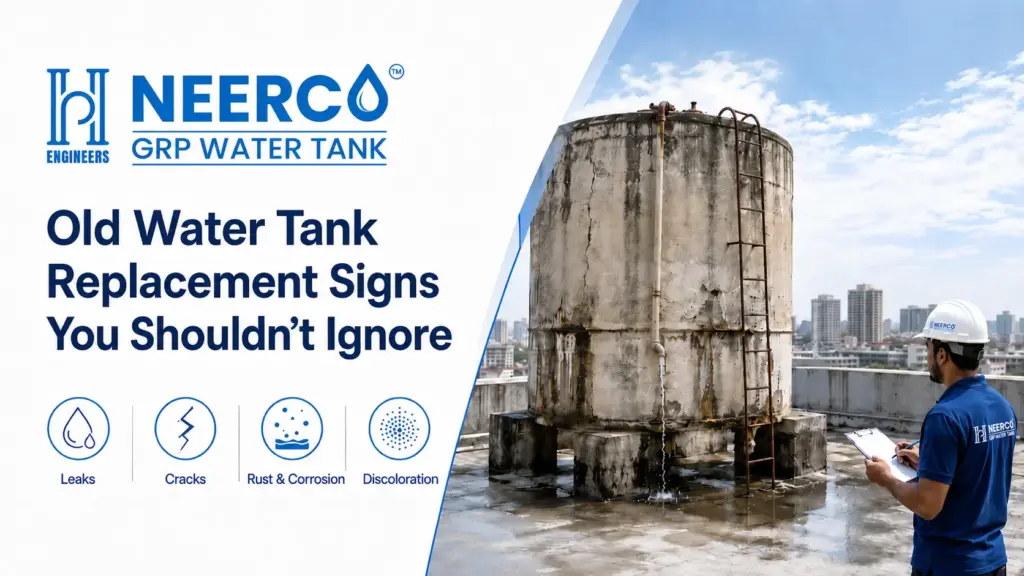
Your water tank likely needs replacement if it shows visible cracks, produces discolored or foul-smelling water, has rust or algae buildup, is over 15 years old, or requires frequent repairs. These are clear signs your water tank needs replacement, and delaying can lead to serious health and structural risks.
Water is life, and the tank storing it matters more than most people realize. Across India, millions of homes, hospitals, hotels and factories rely on water storage tanks every single day. But what happens when that tank becomes old, corroded or damaged? An aging water tank doesn't just store water—it can contaminate it.
In this guide we walk you through the most critical signs your water tank needs replacement, so you can act before a small problem becomes a costly health hazard.
Why Water Tank Replacement Timing Matters
Even the highest-quality water storage tanks have a lifespan. SMC Panel Tanks and GRP (Glass Reinforced Plastic) Tanks, when properly maintained, can last 20–25 years. However, tanks made from inferior materials, exposed to extreme weather, or improperly maintained often show signs of failure well before that. The problem? Most tank damage is invisible until water quality drops or the tank fails completely. Water stored in damaged or corroded tanks is up to 3x more likely to contain harmful bacteria compared to certified, well-maintained tanks.
8 Clear Signs Your Water Tank Needs Replacement
1. Visible Cracks, Chips or Structural Damage
One of the most obvious indicators is physical damage—cracks along the panels, chips at the edges, or visible deformation. Even hairline cracks are dangerous: they allow contaminants, insects and algae to enter. Run your hand along the outer panels and joints and look for discoloration around cracks, which often indicates long-running seepage.
2. Discolored or Foul-Smelling Water
Clean water should be odorless and clear. Yellowish, brownish or musty/metallic-smelling water means the tank interior is likely corroded or harboring biological growth. Stop using the water for drinking or cooking and have the tank inspected and tested.
3. Rust or Algae Buildup Inside the Tank
Open the access panel and look inside. Rust stains, green/black algae growth or slimy deposits are red flags. Once algae or rust takes hold, no amount of cleaning fully restores the tank—replacement is the only reliable solution. Tanks with ISI certification and UV-stabilized materials are specifically designed to resist algae and rust for decades.
4. Tank Is Over 15 Years Old
Age alone is a strong indicator. Tanks older than 15 years—especially those built before modern material standards—were not designed for prolonged UV exposure, temperature swings and chemical water treatment. Check your installation records; if you can't find them, assume the tank is at or past its safe service life.
5. Frequent Leaks and Constant Repairs
One repair is normal maintenance. Repeated repairs at joints, inlets or outlets signal that the tank's structural integrity has weakened. Rule of thumb: if repair costs in a year exceed 30–40% of a new tank's price, replace it.
6. Drop in Water Pressure
A sudden or gradual drop in pressure—especially when the tank appears full—may indicate a blockage, internal damage or a leak. Mineral scale deposits build up over time inside aging tanks, restricting flow.
7. Tank Material Is Visibly Degrading
Modern tanks use SMC (Sheet Moulding Compound) or GRP (Glass Reinforced Plastic)—both corrosion-resistant and UV-stabilized. Signs of degradation include:
- Flaking or peeling inner surface
- Walls becoming brittle or bending under pressure
- Chalky residue in stored water
- Outer surface fading, warping or developing hot spots
8. Failed Water Quality Test
The most definitive sign. If a test reveals elevated bacteria (E. coli or coliform), high turbidity, unusual pH or chemical contamination traced to the tank—replace it immediately. Test annually for any tank older than 10 years.
What Happens If You Delay Replacement?
- Health risks: contaminated water causes typhoid, cholera, dysentery and other waterborne illnesses.
- Structural damage: a failing tank can leak into walls, rooftops and foundations.
- Water wastage: leaking tanks waste hundreds of liters daily, raising bills.
- Legal liability: for hospitals, hotels and factories, a failed audit can mean fines or shutdown.
What to Look for in a Replacement Tank
- ISI Certified — meets Indian quality standards
- NSF Approved — international food-grade safety
- UV Stabilized — prevents algae growth and degradation
- Corrosion-Free — SMC and GRP outperform metal tanks
- Leak-Proof Panel Design — easy installation and future expansion
- CPWD Approved — required for government installations
Not sure whether to repair or replace? See our comparison of SMC Panel Tank vs Overhead Tank vs RCC Tank, or request a free assessment from our engineers. NEERCO by HP Engineers offers SMC and GRP Panel Tanks engineered for 20+ years of reliable, maintenance-free performance.